Faro's self guided walking tour uncovers Roman ruins and a 1,245-skull chapel, while an audio walking tour of Faro narrates storks that never migrate south.
Faro doesn't get the fanfare of Lisbon or Porto, and most travellers only know it as the airport they fly into before heading to the beach. That's a shame, because a self guided walking tour of Faro fits an astonishing amount of history into one small, walled old town: Roman foundations, a bone chapel, a bell tower with a lagoon view, and storks that decided to stay for good.
Direct answer: the best of Faro is entirely walkable in half a day. Stick to the walled Cidade Velha and you'll cover Roman ruins, a thirteenth century cathedral, a chapel built from monks' bones, and a lagoon view, all within a fifteen minute radius.
If how to skip the crowds and actually see a city is the whole point of travelling this way, Faro is about as easy as it gets, most visitors never leave the airport. Here are the seven stops worth making time for.
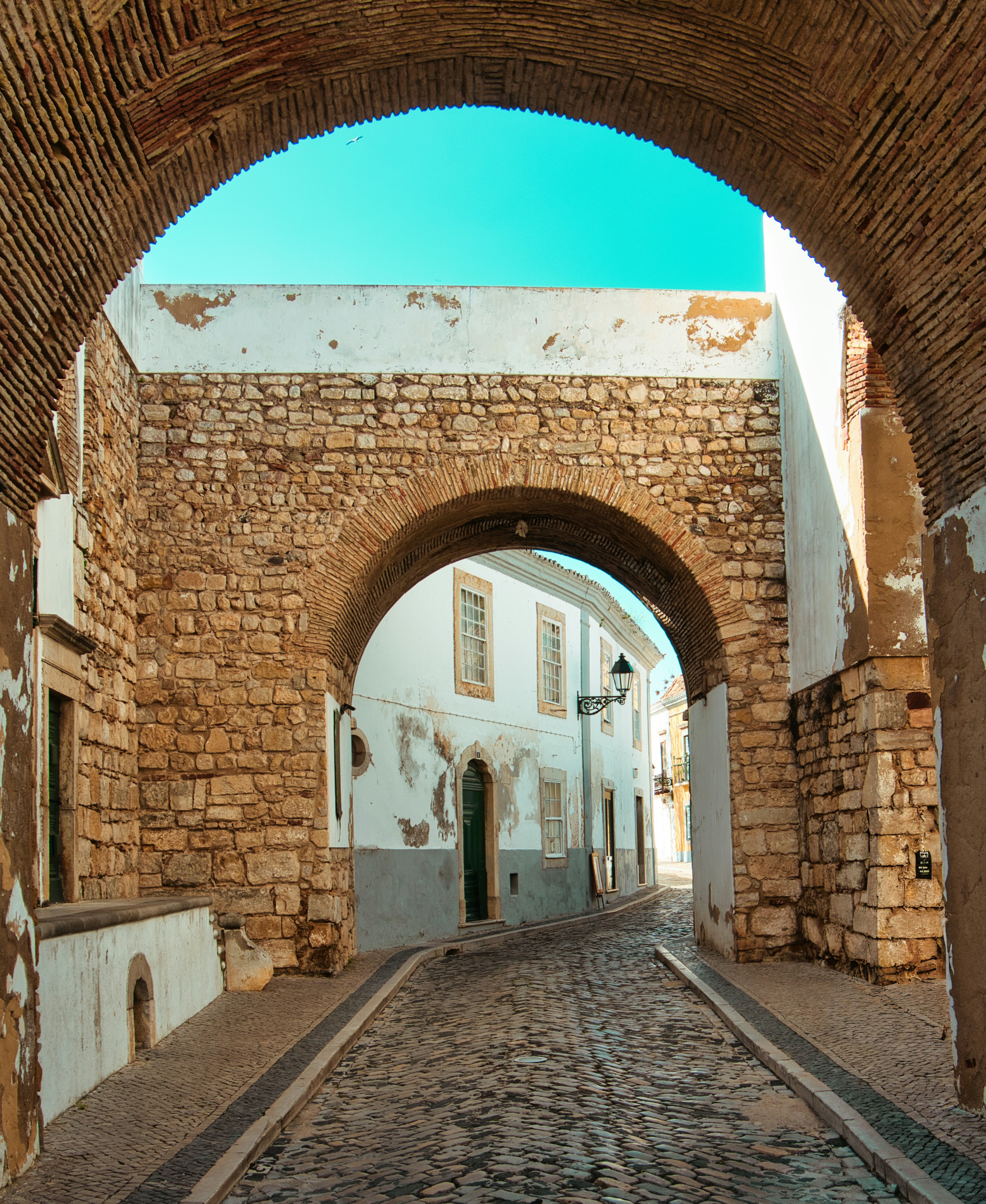
Start here. The nineteenth century Arco da Vila arch is the proper entrance to the old town, and stepping through it does the job of a time machine: cobbled streets, whitewashed houses, and a quiet that feels miles from the airport ten minutes away. Turn up around lunchtime and you'll likely have the arch to yourself, every tour bus in the Algarve is down the coast fighting for beach parking, not queuing here.
Faro's cathedral anchors the main square, rebuilt after the 1755 earthquake but still holding onto tiled side chapels from earlier centuries. Climb the bell tower and the reward is a view over terracotta rooftops out to the Ria Formosa lagoon, along with a front row seat to the next stop on this list.
Here's the Guru Secret: around 80 percent of Portugal's breeding white storks no longer migrate to Africa for winter. Landfill food and warmer winters make the old migration instinct unnecessary, so pairs stay put and enlarge the same nest each year. Faro's cathedral tower and old town rooftops are some of the best places in the country to watch the result, sprawling stick nests with storks clacking their beaks overhead.
Behind the Carmelite church of Nossa Senhora do Carmo sits a chapel built in 1816 from the bones of more than a thousand friars, with around 1,245 skulls set into the plaster walls. A Portuguese inscription above the entrance translates roughly to "stop here and consider that to this state you must come." It's exactly the kind of scandalous, macabre history MGG's Scandalous tour theme was built for.
Long before Faro had an airport code, it had a Roman name: Ossonoba, a fortified town with a forum, temples, and public baths. Trace that history inside the Museu Municipal, a sixteenth century convent whose cloistered courtyard now houses an octopus mosaic pulled from the old town floor. An audio walking tour of Faro on MyGuideGuru narrates the Roman, Moorish and medieval layers in your ear as you go, no laminated museum signage required.
The real reward of Faro's old town isn't any single stop, it's what you find wandering between them. These lanes swallow phone signal, which is why MGG tours download fully for offline use before you set off, so losing reception costs you nothing but a photo you'll actually keep. This is where what city walking tours reveal that a map never will starts to matter, the alley a satellite view flattens into nothing is usually the one with the good view.
Finish where the old town runs out: the Ria Formosa is a lagoon system of barrier islands, salt pans and channels just beyond the city walls, reachable by a short boat trip to islands like Ilha Deserta. It's the flip side of everything you've just walked through, open water and birdlife instead of stone and cobbles, with the same bell tower you climbed earlier now visible looking back from the water.
Yes. Most travellers only see Faro's airport on the way to the beach, but its walled Cidade Velha packs two thousand years of history into a fifteen minute walk: Roman foundations, a rebuilt thirteenth century cathedral, and a chapel built from monks' bones. It's easily worth half a day before you head further along the Algarve.
Faro is best known internationally as the Algarve's main airport hub, but locally it's famous for its walled old town, the Capela dos Ossos bone chapel, and the white storks that nest across its rooftops and cathedral tower year round, now one of the city's most photographed quirks.
Two to three unhurried hours cover the first five stops, all within the walled old town and close enough together for a self guided walking tour of Faro to feel unrushed. An audio walking tour of Faro keeps the pace steady and the stories coming without checking a guidebook. Add a boat trip out to the Ria Formosa and half a day is comfortable.
The Capela dos Ossos sits behind the Igreja do Carmo, built in 1816 from the remains of more than a thousand Carmelite friars, with around 1,245 skulls forming part of the walls. Above the door, a Portuguese inscription reminds visitors of their own mortality, a Baroque memento mori stranger and more macabre than most guidebooks let on.
Very. Cidade Velha is compact, mostly flat, and largely closed to through traffic, making it one of the easiest old towns in Portugal to explore entirely on foot. Cobbles can be uneven underfoot and phone signal drops in the narrower lanes, so an offline map and a decent pair of shoes go a long way.
Curious what else Faro's old town is hiding? MyGuideGuru's Faro tour maps out every stop on this list, story included.
Faro doesn't ask for much of your time, just enough to walk through one gate and follow this list until you reach the water. Skip the transit lounge version and you'll find Roman foundations, a chapel that doesn't pull its punches, storks that know something about staying put, and a lagoon for a finale. Curious what's waiting on your phone before you land? What you actually get with a MyGuideGuru tour breaks it down.


.png)
.png)
.png)
.png)