Rigged ancient ballots, a village built overnight and a church that traps fevers. Walk the Athens streets most visitors rush past on the way to the Parthenon.
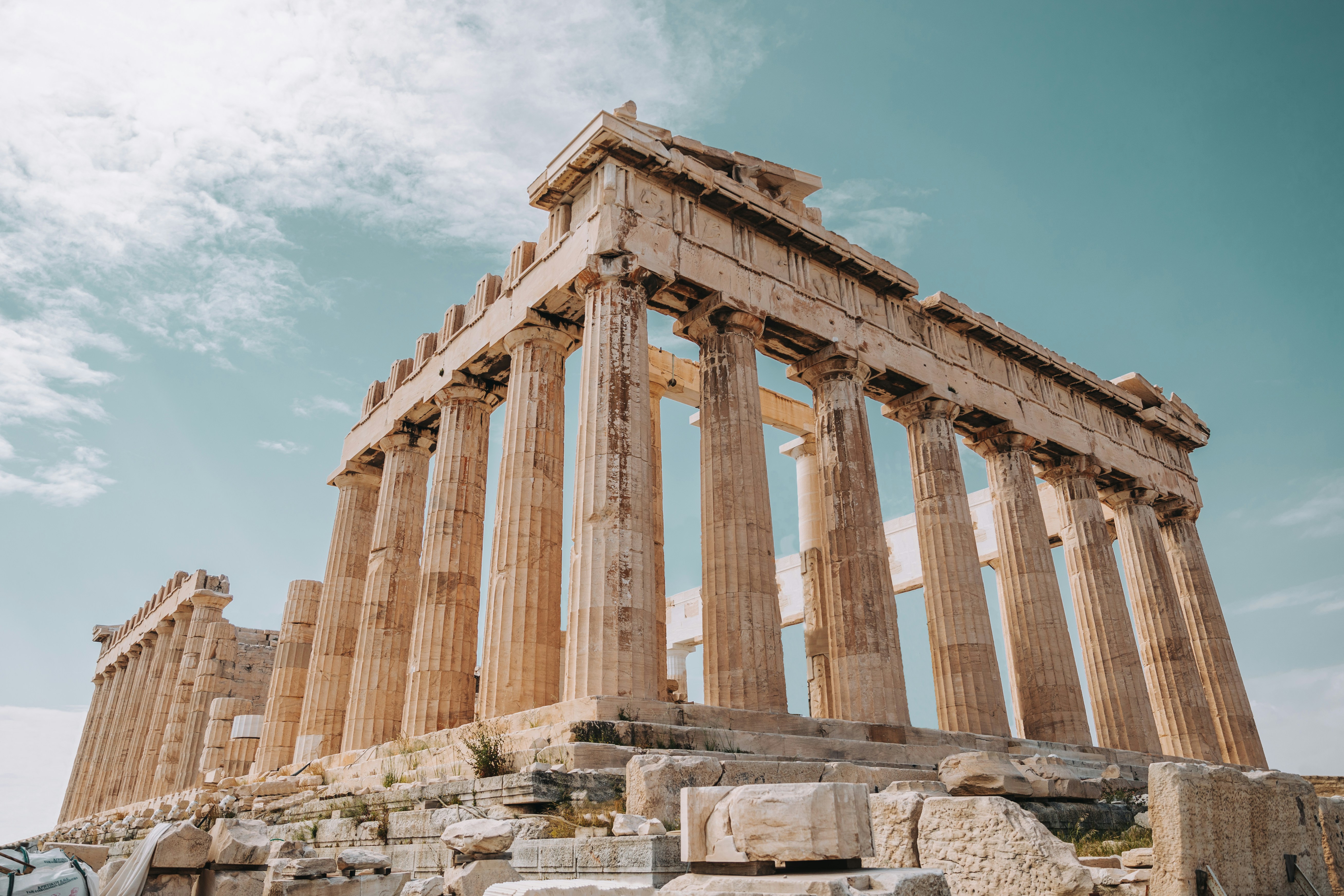
Almost everyone who visits Athens does the same thing. They climb the Acropolis, take the photo, wander back down to a taverna and declare the city done. Fair enough, the Parthenon is spectacular. But the Athens that most people miss is downstairs, tangled through the streets at its feet: a church built around a 2,500-year-old column, a sliver of island village clinging to the rock, and a stash of pre-written ballots that someone once dumped down a well.
So what's the best way to find it? A self guided walking tour of Athens's historic centre, starting at Syntagma Square and finishing in the old potters' quarter of Kerameikos, takes in the city's hidden layers in around four hours, at your own pace, on mostly flat and very walkable streets.
Most people sprint through Syntagma station without looking up. Slow down. When Athens dug its metro ahead of the 2004 Olympics, it hit so much history that archaeologists put the finds on display inside the station: ancient graves, old water pipes and a cut-through of soil layers that reads like a timeline of the city. It's the perfect scene-setter. In Athens, history isn't fenced off somewhere else, it's under your feet.
Up in the square, head for the Tomb of the Unknown Soldier, guarded by the Evzones in their pleated kilts and pom-pom shoes. They change over every hour, on the hour, in a slow, high-kicking routine that's oddly mesmerising, with a full ceremonial parade on Sundays at 11am.
A ten-minute stroll south brings you to Hadrian's Arch, built around 131 AD for the Roman emperor who loved Athens a little too possessively. Look up and you'll find two inscriptions. The side facing the Acropolis reads "This is Athens, the ancient city of Theseus." Walk through and the other side replies "This is the city of Hadrian and not of Theseus." It's essentially the ancient world's version of writing your name on someone else's lunch.
Behind the arch rise the columns of the Temple of Olympian Zeus. There were once 104 of them. Today only 15 stand, with a 16th lying exactly where a storm toppled it in 1852. Remember those missing columns. One of them comes back later.
Wind north into Plaka and keep climbing until the streets run out of tavernas and start running out of width. Welcome to Anafiotika. In the 1840s, stonemasons from the tiny Cycladic island of Anafi came to Athens to build King Otto's shiny new capital. By day they worked on grand neoclassical buildings. By night, so the story goes, they built homes for themselves on the slopes beneath the Acropolis, using an old Ottoman-era custom that a house with its roof on by sunrise couldn't simply be torn down.
The result is a pocket of the Greek islands in the middle of the capital: whitewashed cubes, bougainvillea and lanes so narrow you'll turn sideways to let someone pass.
Your map app will have a meltdown in Anafiotika. The lanes twist, dead-end at people's front doors and double back on themselves, and the blue dot tends to drift helplessly over rooftops. Download your route before you set off (we've written about why offline maps change the way you explore) and keep your voice low. This is still a neighbourhood where people live, hang washing and feed a small army of cats.
Drop down the western side of the rock to the Areopagus, the bald outcrop where ancient Athens tried murder cases and St Paul later preached. A friendly warning: its rock-cut steps have been polished smooth by 2,500 years of feet and are genuinely slippery, especially after rain. Wear shoes with grip, or use the metal staircase alongside.
Below you sprawls the Ancient Agora, the marketplace and political heart of the city. On its western edge stands the Temple of Hephaestus, the best-preserved ancient Greek temple anywhere, largely because it spent centuries working as a church. Opposite is the Stoa of Attalos, a 2nd-century BC shopping arcade rebuilt in the 1950s with funding from John D. Rockefeller Jr. Today it houses the Agora Museum, and inside you'll find this walk's best scandal.
Guru Secret: Athenians could vote to banish a powerful citizen by scratching his name on a pottery shard, an ostrakon (yes, that's where "ostracise" comes from). On the Acropolis's north slope, archaeologists found a well holding around 190 ostraka, every one bearing the name Themistocles. Handwriting analysis suggests only about fourteen people wrote them. These were pre-filled ballots, ready to hand out to voters, then quietly dumped. Ancient Athens, it turns out, invented democracy and how-to-vote cards in the same breath. Themistocles was eventually ostracised anyway, in the early 470s BC.
It's exactly the kind of story we build tours around: the history hiding behind the photo, told like gossip, which is why the Scandalous theme in an audio walking tour of Athens practically writes itself.
Climbing the Acropolis on the same day? Crowds peak between roughly 10am and 2pm and entry is by timed ticket (€30 for adults), so book the 8am slot. Getting up early is the best crowd-beating trick in Athens.
Walk north out of the Agora into Monastiraki Square, all flea-market chaos and souvlaki smoke. In its corner sits the domed Tzistarakis Mosque, built in 1759 by the city's Ottoman governor. Tradition says he blew up one of those columns from the Temple of Olympian Zeus to burn into lime for his plaster. It went badly. He was fined and exiled for damaging what technically belonged to the Sultan, and when plague struck Athens soon after, locals on all sides blamed the destroyed column for releasing evil into the city. Historians suspect the stone actually came from nearby Hadrian's Library, but the curse makes a much better story.
Cut through Psyrri to 70 Evripidou Street, where a modest church has an ancient Corinthian column bursting through its roof. This is Agios Ioannis stin Kolona, St John of the Column. For centuries, feverish Athenians tied coloured threads to the column in the belief that the saint would bind the illness there and keep it, with different colours for different fevers.
Finish a few minutes west at Kerameikos. The Eridanos River once deposited rich clay here, making it the potters' quarter that gave us the word "ceramic." It was also the city's great cemetery, where the Sacred Way set off for Eleusis and where Pericles delivered his famous funeral oration in 431 BC. Today it's one of the calmest corners of central Athens, with grave markers among the wildflowers and a trickle of the old Eridanos still flowing through the ruins. A fitting place to end a day spent with the people who made this city, not just the monuments they left behind.
How long does a self guided walking tour of Athens take?
This route covers around four to five kilometres and takes roughly four hours at a relaxed pace, including time inside the Agora. Add another two to three hours if you're climbing the Acropolis on the same day. With no group to keep up with, you can split it across two mornings or linger over a frappé in Plaka whenever tired legs start to win.
Is Athens easy to explore on foot?
Yes. The historic centre is compact, with the big sights linked by pedestrian streets like Dionysiou Areopagitou. The tricky bits are Anafiotika's maze of lanes and the slippery marble on the Areopagus and the Acropolis. Comfortable shoes with real grip matter more here than in almost any other European city.
Do I need tickets for the Ancient Agora and Kerameikos?
Yes, both are ticketed sites, separate from the Acropolis, sold on arrival or through the official Hellenic Heritage e-ticket site. Prices and combined ticket options have changed several times recently, so check before you go. From November to March, many sites, including the Acropolis, are free on the first Sunday of each month, though expect bigger crowds.
When is the best time for an audio walking tour of Athens?
Spring and autumn are ideal, with warm days and smaller crowds. Summer works if you start early, rest through the midday heat and save the hills for late afternoon. Winter is mild and wonderfully quiet, but site hours are shorter, with the Acropolis closing at 5pm, so plan your ticketed stops for the morning.
Can I do this walk with kids?
Absolutely. The Evzones' high kicks and a village built overnight are instant crowd-pleasers. Choose the KidQuest theme in MyGuideGuru and the stories become challenges and clues, which keeps little legs moving between stops. Plaka's pedestrian streets are pram-friendly, but Anafiotika's steps are not, so pack a carrier for the littlest explorers.
Want more ideas for your next trip? Have a wander through the rest of the MyGuideGuru blog for city guides, travel hacks and stories from the road.
The Parthenon will always steal the photo, and it deserves to. But the Athens that sticks with you lives in the gaps: a Roman emperor's petty inscriptions, an island village built by moonlight and a well full of rigged ballots. Download MyGuideGuru, pick your theme, and let a self guided walking tour show you the city that's been hiding in plain sight beneath the Acropolis.