Paris's self guided walking tour uncovers 19th-century glass-roofed passages and market streets, while an audio walking tour of Paris narrates the rest.
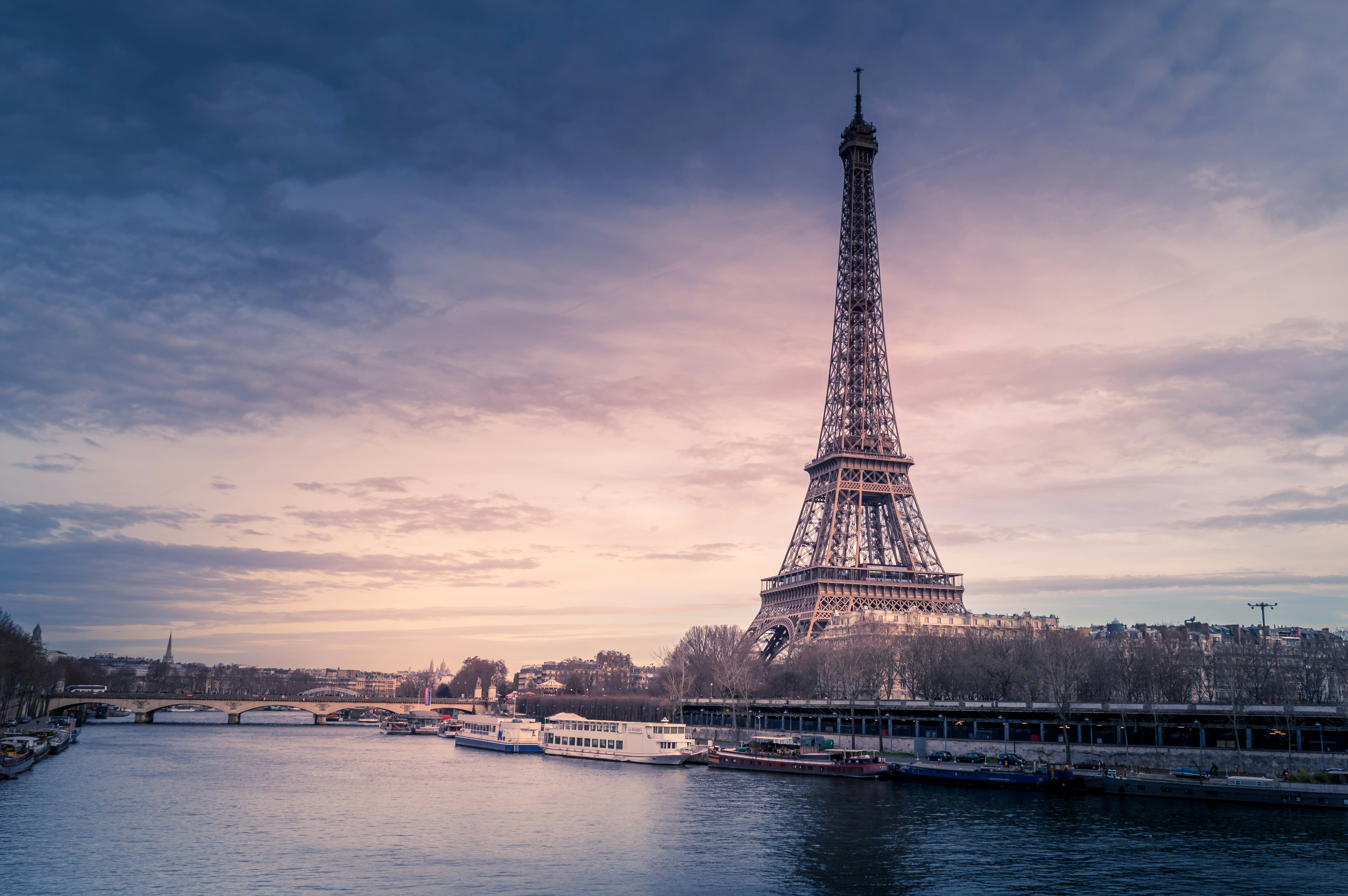
Everyone arrives in Paris with the same three stops circled: the Eiffel Tower, the Louvre, Notre-Dame. Fair enough, they've earned the hype. But the Paris that sticks with you turns up somewhere none of those queues lead: behind an unmarked door, under a glass roof nobody looks up at, or along a street selling the same cheese since before the Revolution. The best way to find it is on foot.
Direct answer: skip the crowds by walking Paris's covered passages, market streets and untouched quarters instead of queuing at the big three sights. A self guided walking tour of Paris lets you set the pace and duck into a passage on a whim, while still knowing exactly what you're looking at.
Start with the covered passages, because almost nobody does. By 1867, Paris had roughly 183 of these glass-roofed arcades threading between its streets, an entire parallel city built for shoppers who wanted to browse without getting rained on. Passage des Panoramas opened in 1800, Galerie Vivienne followed in 1826, both gas-lit decades before electricity, both drawing writers, gossips and at least one reformed criminal. Eugène-François Vidocq, the former convict who became Paris's first chief of police (and the model for half the detectives in French literature), was known to haunt these arcades. That's your Guru Secret: the passages weren't just early shopping malls, they were where Paris's underworld and its literary elite crossed paths under the same glass ceiling. Haussmann's sweeping renovation flattened most of them for his grand boulevards. Only 25 survive today, and an audio walking tour of Paris is the easiest way to string them together, since each one tells you what you're looking at right as you walk under the glass.
From there, head to Rue Mouffetard in the 5th arrondissement, one of the oldest streets in the city and originally part of a Roman road running toward Italy. It's still a working market street: cheesemongers, a bakery queue that starts before 8am, and cobblestones worn by a couple of thousand years of foot traffic. This is where a themed route earns its keep, a Culinary-style walk through Mouffetard turns a wander into an education in what Parisians actually eat.
South of the centre, the Butte-aux-Cailles in the 13th arrondissement still feels like its own village, all low buildings, cobbled lanes and murals tucked between them. Its centrepiece is stranger than most: an artesian well at Place Paul Verlaine, drilled in 1863 on Haussmann's own orders to supply water to the growing arrondissement below. It reaches somewhere between 600 and 700 metres down, and the fountain still runs free today, with locals turning up with empty bottles the way you'd pop into a bakery. Joining the queue is about as close as you'll get to drinking the same water Parisians have collected since the Second Empire.
Then there's Le Marais, the one central neighbourhood Haussmann's bulldozers mostly skipped. Its streets are narrower, its courtyards hidden behind carriage doors, and its layout still medieval in places. That charm comes with a catch: GPS struggles in these tight, high-walled lanes, a common small frustration for travellers here. It's exactly the kind of friction What City Walking Tours Reveal That Google Maps Can't digs into, and why offline maps and audio narration matter more here than almost anywhere else you'll walk.
Skip the crowds on the Sacré-Cœur steps too, and walk two streets over to find Le Clos Montmartre, the last working vineyard inside Paris. It exists purely because a group of local painters and writers refused to let a developer build over the hillside, replanting vines here in 1933 to keep the land as vineyard instead of apartments. The grape harvest has had its own festival every October since 1934, this year marking its 93rd edition, and the wine itself is famously more sentimental than good. Nobody in Montmartre is pretending otherwise, it was never really about the bottle.
Finish, if your legs allow it, on the Coulée verte René-Dumont, better known as the Promenade Plantée. Built along a disused rail viaduct and opened in the late 1980s, it was the world's first elevated urban park, decades before New York borrowed the idea for the High Line. Walking it at rooftop height, past gardens planted where trains once ran, is a Guru Insight moment: the city sounds quieter up there, and details like chimney pots and hidden balconies become visible for the first time.
None of this requires a booked guide standing over your shoulder. What You Actually Get With a MyGuideGuru Tour lays out how MyGuideGuru handles it: downloaded audio and maps that work without signal, a route built around whichever theme suits your day, and local tips woven in as you walk.
Walk it, and choose routes that avoid the big three sights at peak hours. The covered passages, Rue Mouffetard and Le Marais sit within easy reach of central Paris but see a fraction of the foot traffic. A self guided walking tour of Paris lets you time these detours around the tour buses, not alongside them.
Yes, every surviving passage is open to the public and free to walk through, though some close their gates overnight and on Sundays. Passage des Panoramas, Galerie Vivienne and Passage Jouffroy are the easiest to combine on one route, since they sit close together near the Grands Boulevards.
Three to four days lets you properly walk the centre, including a passages route, a Marais wander and the Promenade Plantée, without rushing. Two days still works if you focus on one or two neighbourhoods rather than trying to cover everything.
Central Paris is compact and genuinely walkable: arrondissements one through seven sit within an easy hour's stroll of each other. The metro earns its keep for jumping between distant neighbourhoods, but most of what makes Paris memorable turns up on the final stretch on foot.
Le Marais rewards walking more than almost anywhere else in the city, thanks to its narrow medieval streets, hidden courtyards and density of small museums and boulangeries. The 5th arrondissement around Rue Mouffetard is a close second for history and food in the same stroll.
No. MyGuideGuru's tours download in advance, so maps and audio narration keep working even in flight mode, which matters in Paris's older quarters and underground where signal regularly drops out. Download your route before you land and connectivity stops being a concern.
Paris rewards the traveller who's willing to wander. The passages, the market streets, the neighbourhoods Haussmann never touched, they're all within walking distance of wherever you're standing, and a self guided walking tour of Paris is the easiest way to string them together without losing an afternoon to a queue. Download MyGuideGuru, pick your theme, and go find the Paris that isn't on a postcard.


.png)
.png)
.png)
.png)