Two rival cities, centuries of grudges and one very hungry rooster. Compare Florence and Siena on a self guided walking tour and see both without rushing.
Florence and Siena sit about 70 km apart by road, and for several centuries each spent a great deal of energy trying to flatten the other. The grudge left Tuscany with two completely different cities, which is why a Florence and Siena walking tour is so rewarding. One is a Renaissance show-off. The other is a medieval introvert that still hasn't quite forgiven its neighbour.
The best self guided walking tour Florence and Siena can offer starts with two days in Florence, then the rapid bus to Siena (about 75 minutes) for a full day, or better, a night. Florence is for Renaissance masterpieces. Siena is for medieval atmosphere, with far fewer people in the way.
The rivalry was political before it was anything else. In the 13th century Guelph Florence and Ghibelline Siena fought repeatedly over land, trade and allegiances. Siena's revenge came on 4 September 1260 at the Battle of Montaperti, where the Florentines were routed. "Remember Montaperti!" is still the Sienese taunt, more than 750 years later.
One Florentine knight, Bocca degli Abati, is said to have changed sides mid-battle by slicing off the hand of Florence's standard-bearer. Dante, a Florentine himself, showed no mercy: he puts Bocca in the ninth circle of Hell, where he accidentally kicks him in the face, then pulls out handfuls of his hair to make him talk.
Siena's triumph was short-lived. In 1554 Cosimo I de' Medici, backed by Emperor Charles V, set out to take Florence's last rival in Tuscany. After a long, starving siege Siena surrendered in April 1555, and two years later Spain handed the city over to Florence.
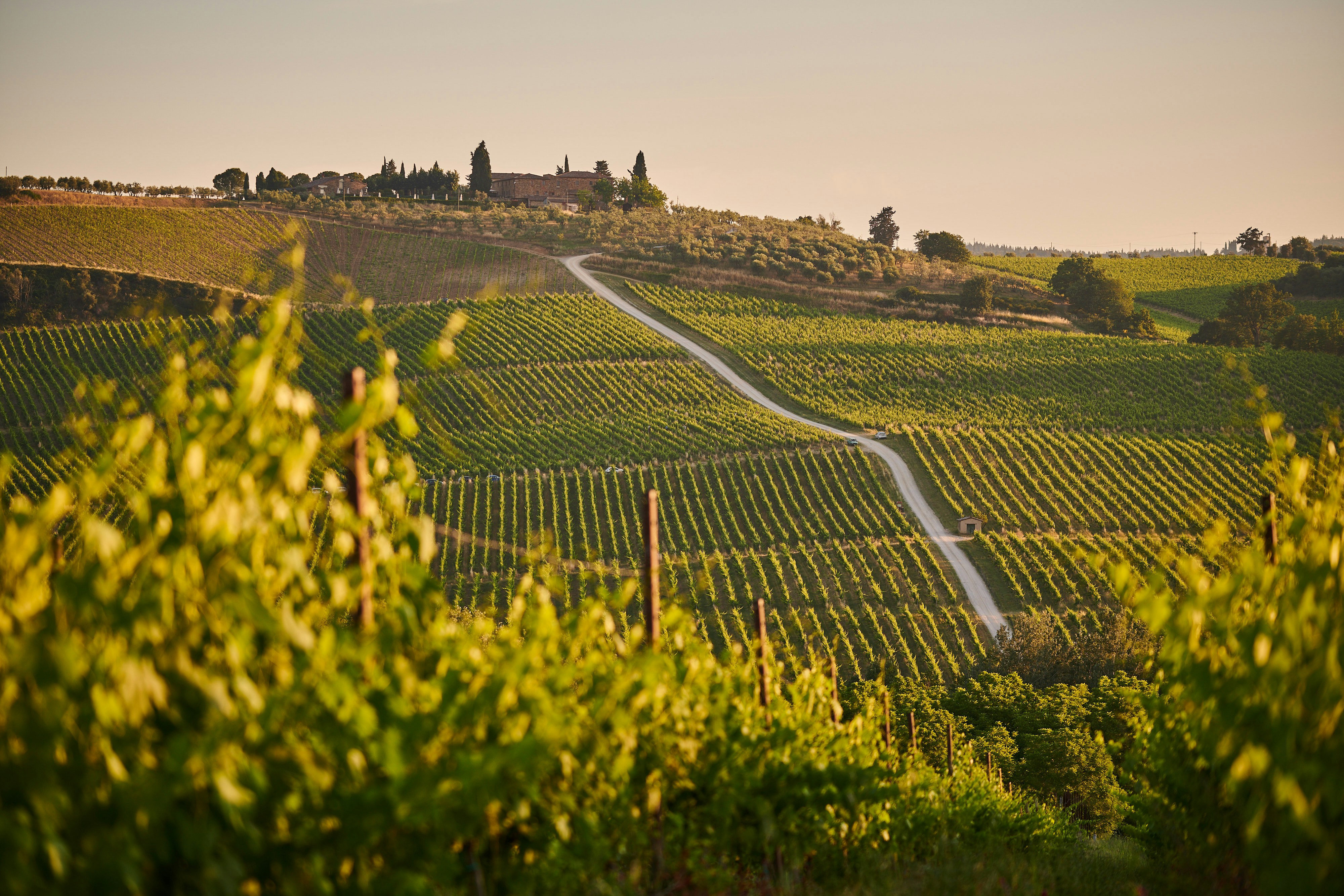
Between the two cities lie the Chianti hills, and they argued over them for centuries. Legend says they once agreed to settle it with a race: at cockcrow a knight would ride out from each city, and wherever they met would become the border.
Siena chose a white rooster and fed it handsomely. Florence chose a black one and starved it. The famished black rooster crowed long before dawn, the Florentine rider got a huge head start, and the two met only a few miles outside Siena, near Fonterutoli. Almost all of Chianti passed under Florentine control, and the black rooster, the Gallo Nero, became the symbol of Chianti Classico. It still sits on the bottles today.
It's folklore rather than documented history, but it captures how each city likes to see the other: Florence as the cunning one, Siena as the one too dignified to cheat.
Florence doesn't do subtle. Its cathedral dome, designed by Brunelleschi and completed in 1436, was built without the wooden scaffolding a dome of that size would normally need, and it remains the largest masonry dome ever built. You can climb 463 steps between its two shells for the view, but expect a queue.
Down at the Arno you meet the Ponte Vecchio. In the 1590s Grand Duke Ferdinand I evicted the butchers, whose smell drifted up into the Medici's private corridor overhead, and replaced them with goldsmiths, who are still there. It was the only Florentine bridge left standing when German forces retreated in August 1944.
Then there's the art. The Uffizi and the Accademia, home of Michelangelo's David, are the big two, and both sell out weeks ahead in busy periods, with the Accademia going first. Book before you leave home. If you'd rather meet Florence through its stomach, we've mapped the dishes that define the city in our guide to eating your way through Florence.
Siena doesn't shout, it draws you in. The Piazza del Campo is a shell-shaped brick square, paved in 1349 and divided into nine sections that fan out from a central drain, said to be a nod to the Nine, the council that ran the city. The tower beside it, the Torre del Mangia, is named after its first bellringer, nicknamed "profit eater".
Siena's ambition ended abruptly. In 1339 it approved an expansion of its cathedral on an extraordinary scale, then the Black Death arrived in 1348 and work slowed, before structural flaws finished the job. What's left is the Facciatone, a giant unfinished wall you can climb (through the cathedral museum, 131 steps) for a rooftop view over the whole city.
Siena was also a banking power. Its Monte dei Paschi, founded in 1472, is the oldest continuously operating bank, and it still has its headquarters in Palazzo Salimbeni. The contrade, the Palio and the best of the medieval lanes are all unpacked in our guide to Siena beyond the Palio.
Florence won the long game. Siena was a serious commercial and banking rival until the Black Death and Florentine conquest left it behind. Even their symbols differ: Florence wears the lily, while Siena wears the black and white Balzana, the same two colours that stripe its cathedral.
On the ground, the difference is how you spend your time. Florence is a city of headline acts, so your day is built around timed tickets and famous names. Siena is a city of streets, so your day is built around wandering, and its best moments are the ones nobody booked. Florence dazzles you. Siena slows you down.
The rapid coach from Florence drops you at the edge of Siena's old town, whereas the train leaves you at the bottom of the hill, outside the walls. There's no high-speed service, so the train takes around an hour and a half, while the bus takes about an hour and a quarter, which is why for most people the bus wins. Frequent services run from near Santa Maria Novella station, so you can leave after breakfast and be wandering Siena by mid-morning.
A day trip works, but it's rushed. If you can spare the time, stay a night in Siena: once the day-trippers leave, the Campo is a different place. A good plan is two days in Florence, then one or two in Siena. Driving? The Chianti road between them passes Castellina and Fonterutoli, where the rooster legend says the knights met.
Start Florence early, because the queues are shortest then, and our tips on how to skip the crowds and actually see a city apply here more than most.
This feud is a story best heard on the spot. A Florence and Siena audio tour can tell you about Montaperti while you're standing in the Campo, and about the Ponte Vecchio butcher scandal while you're crossing the bridge, so you're looking at the place instead of reading about it.
There's a practical catch. Siena's medieval lanes are narrow, steep and nearly identical, and phone signal drops out fast between the stone walls. Download each city's tour before you leave your hotel. MyGuideGuru lets you build a tour for each city, with audio storytelling, maps between stops and offline downloads, and we've detailed what a MyGuideGuru tour actually includes.
One more piece of friction: the hill. If you arrive by train, budget for a steep walk up into the old town, and wear shoes you trust on the cobbles.
Is Siena worth visiting from Florence?
Yes, it makes a well-loved day trip for good reason. Siena offers a completely different medieval feel, with the Campo, the striped cathedral and the contrade districts, and it's far quieter than Florence's headline sights. It rewards wandering more than ticking off.
How do you get from Florence to Siena?
The rapid bus is usually best, taking about 75 minutes, with a slower regular service as well. The train takes about an hour and a half and drops you at the bottom of the hill, outside the old town. By car, it's about 70 km.
What's the best self guided walking tour Florence and Siena itinerary?
Three or four days works well: two in Florence and one or two in Siena. That gives you time to book the big museums, climb the dome and still wander Siena without watching the clock. A shorter trip can work as a day trip, but you'll be hurrying.
Is there a Florence and Siena audio tour?
Yes. With MyGuideGuru you can build a tour for each city, with audio storytelling, maps between stops and offline downloads. Because the two cities' stories are so intertwined, it works well to hear Florence's side first and then Siena's.
Is Florence or Siena better?
They're better at different things. Florence has the world-class art, the dome and the Ponte Vecchio. Siena has atmosphere, intact medieval streets and fewer crowds. If you only have time for one, choose Florence for art and Siena for atmosphere, but most travellers find they want both.
Want more Tuscan stories before you go? Explore the rest of the MyGuideGuru blog for city guides, travel tips and the secrets behind the sights.
Florence and Siena spent centuries trying to outdo each other, and travellers get to enjoy the spoils. Walk Florence for the art and the swagger, then Siena for the stripes, the squares and the slower pace. Download MyGuideGuru, build a Florence and Siena walking tour with a tour for each city, and let the rivalry tell its story one street at a time.