Tarragona's Roman amphitheatre held 15,000 spectators, then became a martyr's grave beneath a church. Walk Tarraco's ruins at your own pace, no guide required.
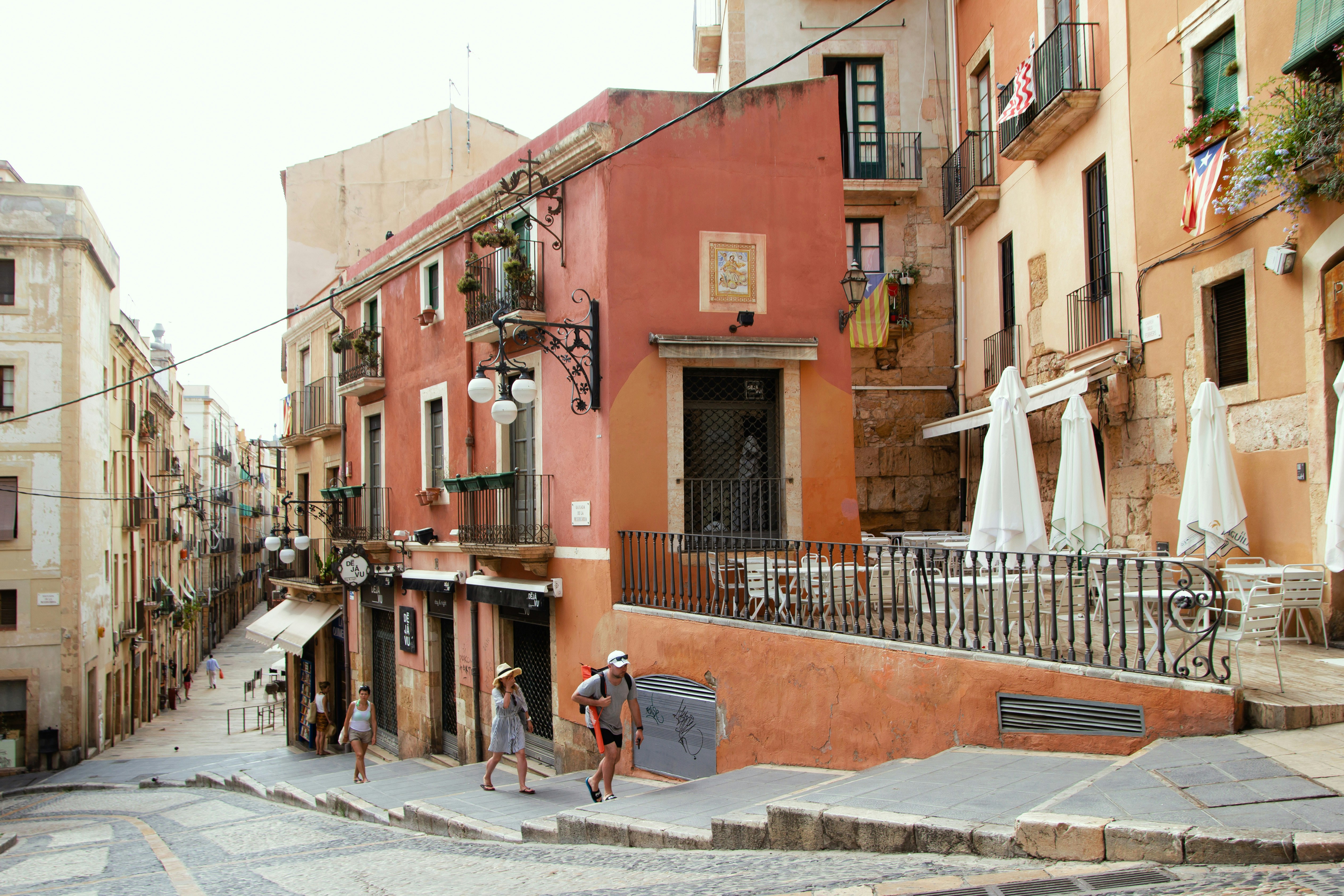
Most travellers land in Barcelona and never get forty minutes further south, which is exactly why Tarragona is worth the detour. This is Tarraco, once one of the most important cities in the Roman Empire, and today it's one of the best places in Europe to try a self guided walking tour without fighting a tour group for a decent photo.
Tarragona rewards a full day on foot. Its compact old town holds a Roman amphitheatre, a circus, ancient walls and a cathedral built over a mosque and a temple, nearly all of it within a single square kilometre, easily covered without booking a guide.
Long before Barcelona was more than a fishing settlement, Tarraco was capital of Hispania Citerior, one of the largest provinces in the Roman world. UNESCO recognised the whole archaeological ensemble in 2000, and it's easy to see why. The city walls here are among the best preserved in Europe, built earlier than the amphitheatre or circus that came to define the city.
On 21 January 259 AD, the bishop Fructuosus and two deacons were burned alive in Tarragona's amphitheatre, in front of a crowd that had gathered for entertainment, not an execution. It's not the kind of detail on the average plaque. Centuries later, a Visigothic basilica was built directly over the spot, then a Romanesque church on top of that: three layers of history stacked on the same patch of sand where 15,000 spectators once watched gladiators. The podium still carries a 140 metre inscription, the longest of its kind found anywhere in the empire.
It's precisely why a self guided walking tour suits Tarragona better than a scheduled bus ever could. The tricky part of the old town isn't finding the sites, it's that they're crammed into barely a square kilometre of narrow medieval streets, which plays havoc with a normal phone map. GPS pins wobble between buildings and you'll end up walking the same lane twice. It's exactly the kind of friction a proper audio guide solves, cueing off what you're looking at rather than a blue dot that can't tell one alleyway from another. Start at the Balcó del Mediterrani on Rambla Nova, where the old town meets the sea, then work down through the forum, the circus and the praetorium tower before finishing at the amphitheatre. Give it three to four hours with stops for photos. And unlike Barcelona, you won't need to arrive at opening time to beat the crowds here.
A few kilometres outside the centre stands the Pont del Diable, a 217 metre stretch of the original aqueduct that once carried water 50 kilometres from the Gaià river, still standing 26 metres tall over a ravine two thousand years on. Local legend blames the devil for building it overnight in exchange for a girl's soul. The Romans just called it good engineering.
Fast trains from Barcelona reach Tarragona in as little as thirty minutes, making it one of the easiest add-ons to any Barcelona trip. If you've already wandered Barcelona's own hidden Roman quarter, Tarragona is the deeper version of that same story: an entire Roman capital rather than a few scattered ruins beneath a modern city.
Tarragona is known as Tarraco, once capital of Rome's largest Iberian province. Its amphitheatre, circus, forum and city walls form one of the most complete Roman sites left standing in Europe, recognised as a UNESCO World Heritage ensemble since 2000. Most of it sits within an easy walk of the old town.
A single day is enough to see the amphitheatre, Roman walls, cathedral and circus at a relaxed pace, roughly three to four hours of walking. Add an extra hour if you want to reach the Pont del Diable aqueduct just outside the city centre.
Yes. Trains from Barcelona take as little as thirty minutes, and Tarragona's old town is compact enough to explore fully in a day. It offers a quieter alternative to Barcelona's own Roman remains, with considerably more of the ancient city still intact.
Absolutely. The main sites sit close enough together to walk between in minutes, and a self-guided audio tour can narrate the history at each stop, which matters here given how tightly the streets are packed and how easily GPS pins misfire in the old town.
The aqueduct sits a short bus or taxi ride from central Tarragona, though it's walkable in about forty minutes if you don't mind the road out of town. Go in the late afternoon when the light hits the stone arches best.
Tarragona doesn't ask for much, just comfortable shoes and a few hours to actually look up. Between the amphitheatre's grim history, walls older than the empire that built them and an aqueduct still standing after two thousand years, it's one of the densest history lessons in Spain that nobody queues for. Load up your first self-guided tour before you go and let Tarraco tell its own story, in whatever order you want to hear it.


.png)
.png)
.png)
.png)